March of Progress
Sorcery
Choose target artifact creature you control. For each creature chosen this way, create a token that's a copy of it.
Overload 
 (You may cast this spell for its overload cost. If you do, change its text by replacing all instances of "target" with "each.")
- CMC
- 3
- Mana cost

- Color identity
- U
- Rarity
- rare
- Set
- Magic Online Promos
- Price
- —
- EDHREC rank
- #4703
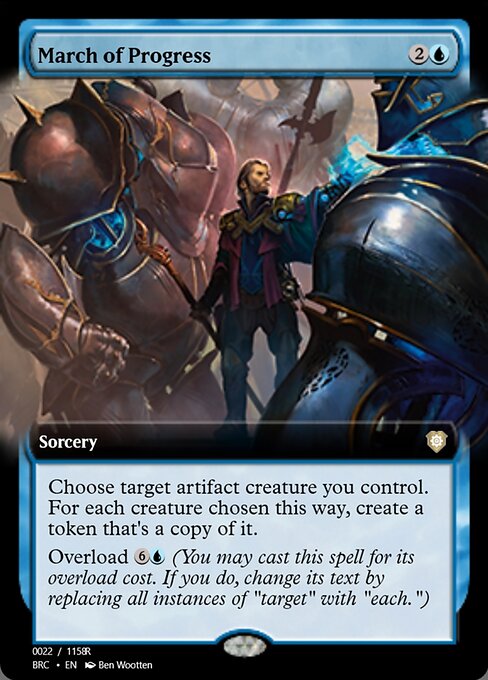
March of Progress lets you copy any number of artifact creatures from your graveyard onto the battlefield — a mass recursion effect that can rebuild an entire board state in a single turn. The cost is real: you discard cards equal to the number you return, so it punishes empty hands but rewards graveyard-heavy artifact builds like Urza, Chief Artificer.
Best Commanders
Commanders with the highest synergy
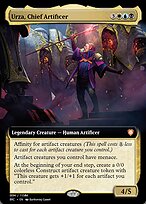
Urza, Chief Artificer
Urza, Chief Artificer builds a board of artifact creatures naturally and loses them just as fast to removal and wipes, making March of Progress a one-shot reload that can resurrect a half-dozen constructs and thopters at once. The discard cost barely matters when your hand is full of artifacts that belong in the graveyard anyway.
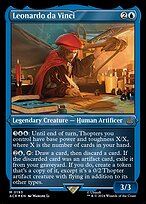
Leonardo da Vinci
Leonardo da Vinci generates a steady stream of artifact creature tokens and benefits enormously from recurring the ones that die — March of Progress refuels the board after a wipe and keeps the token engine running. The card disadvantage trades cleanly when da Vinci will replace the discarded cards within a turn or two.
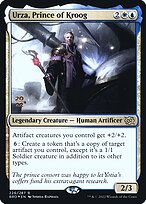
Urza, Prince of Kroog
Urza, Prince of Kroog animates artifact tokens as creatures, so March of Progress doubles as both recursion and reinforcement after a board wipe. Getting back even two or three key constructs immediately threatens lethal with Urza's anthem effect online.
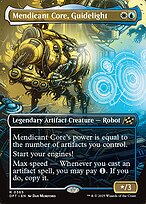
Mendicant Core, Guidelight
Mendicant Core, Guidelight generates artifact creatures as part of its core loop, and March of Progress slots in as a recovery tool when that loop gets disrupted by removal or counterspells. Recurring multiple artifacts in one shot can immediately restore the mana generation and synergy pieces the deck relies on.
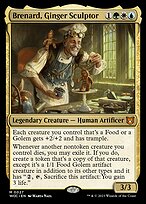
Brenard, Ginger Sculptor
Brenard, Ginger Sculptor turns creature deaths into Golem tokens, so March of Progress recursion triggers another wave of Brenard's replacement effect if those artifacts die again. It's a recursive value engine that compounds every time the board resets.
Format Analysis
Where it lives, where it can’t
| Format | Verdict |
|---|---|
| commander | legal |
| legacy | legal |
| modern | not legal |
| pioneer | not legal |
| standard | not legal |
| vintage | legal |
| pauper | not legal |
| oathbreaker | legal |
March of Progress is a Commander card through and through — the power scales with graveyard density and a high artifact creature count, conditions that 100-card singleton artifact builds reliably create. In Legacy and Vintage, where it's technically legal, the four-mana sorcery speed and discard symmetry make it far too slow to compete with the card-advantage engines those formats support. Oathbreaker can support it in dedicated artifact shells, but the smaller deck size means fewer redundant pieces and less reliable graveyard depth. If you're running March of Progress, you're running it in Commander, and specifically in an artifact creature deck that expects to lose multiple pieces before turn eight.
Key Combos
Combo lines featuring this card
Price Context
Current price
unknown tier
Pricing data for March of Progress isn't currently available, so check Scryfall or TCGPlayer for the most accurate current number before buying. Given its narrow home in artifact Commander decks and its fairly recent printing, it likely sits in the budget-to-mid range — worth picking up for any dedicated artifact build regardless.
Explore
Sources
Updated . Data from Scryfall, EDHREC, and Commander Spellbook.